What Reasonable Doubt Reminds Us About Conduct Disorder & Misdiagnosed Black Boys
By Dr. Patrice N. Douglas, LP, LMFT
Psychologist • Therapist • Founder & CEO
Conduct Disorder is one of the heaviest diagnoses a child can receive. It’s not a label for simple misbehavior, it assumes intentional cruelty, manipulation, and a persistent disregard for others. It shapes how teachers respond, how clinicians interpret behavior, and how systems intervene. Yet this diagnosis is placed on Black boys at disproportionately high rates, often without the comprehensive evaluation required to make such a serious determination.
This doesn’t happen because Black boys demonstrate Conduct Disorder more often. It happens because they are interpreted through a lens of suspicion, control, and fear before anyone stops to ask what they’re experiencing or what they might need. For decades, Black boys have been treated as older, tougher, angrier, or more intentional in their behavior than children their age. Behaviors that would be seen as developmental, neurodivergent, or stress-related in white children are too often labeled as aggression or defiance in Black boys. Misdiagnosis does not begin with behavior—it begins with bias.
Understanding Conduct Disorder matters here. It requires a repeated, purposeful pattern of violating others’ rights: aggression toward people or animals, serious rule violations, property destruction, deceit, and limited remorse. But intent is key. Impulsivity, overwhelm, sensory overload, social confusion, trauma responses, or developmental delays do not meet criteria. Before diagnosing Conduct Disorder, clinicians must rule out ADHD, Autism, trauma, anxiety, depression, learning differences, and environmental stress. Yet Black boys are rarely given that full, necessary evaluation. Their behavior is judged rather than understood, interpreted rather than explored.
The consequences stretch far beyond childhood. Conduct Disorder is the only childhood diagnosis that can lead directly into Antisocial Personality Disorder in adulthood, a diagnosis often weaponized to frame someone as inherently dangerous. When a Black boy is misdiagnosed early, that label shapes how every future system interacts with him—from school discipline to mental health treatment to the legal system. In a country where Black boys already face harsher discipline, higher suspension rates, and greater juvenile justice involvement, a misdiagnosis can accelerate them into systems they never belonged in.
The data makes the pattern impossible to ignore. Black youth are diagnosed with Conduct Disorder and Oppositional Defiant Disorder at much higher rates than white youth, even when their symptoms align more closely with ADHD, Autism, trauma, or anxiety. White children receive more assessment tools, more patience, and more alternative explanations before a behavioral diagnosis is applied. Black boys, however, have their behaviors viewed as intentional at much higher rates. Schools discipline them more often and evaluate them less. And despite showing equal or greater signs of ADHD or Autism, Black children are significantly underdiagnosed with both.
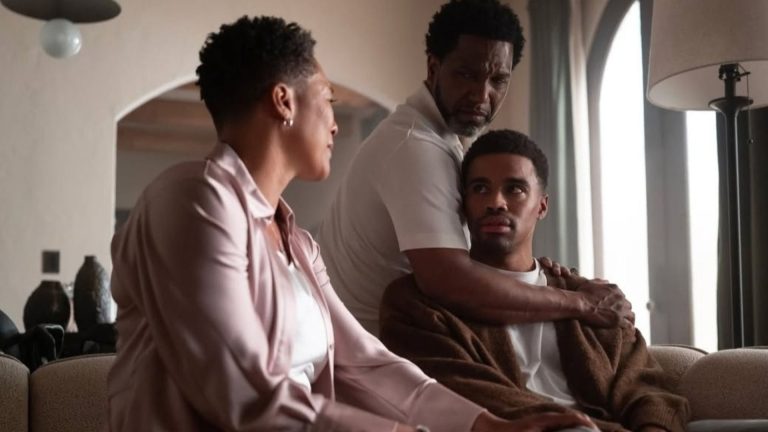
This distorted lens came to life on screen through the character Ozzie in Hulu’s Reasonable Doubt. In one scene, a doctor immediately assumes Ozzie committed animal cruelty because of how a dog ingested chocolate. No evidence. No developmental consideration. No curiosity. Just stereotype → assumption → conclusion. Ozzie becomes a mirror for how society misreads Black boys. But the deeper truth about him is one many Black boys live every day: he was a child carrying adult responsibilities long before he had the emotional capacity to manage them.
As the gifted one, the successful one, the child who uplifted his family, Ozzie’s role wasn’t simply to grow — it was to perform. Children like him learn to suppress their needs, hide their confusion, and mimic emotional stability not because they are manipulative, but because they believe it keeps them safe. This forced maturity is often praised as composure, but it is actually emotional delay. When a boy has been performing adulthood since childhood, his development doesn’t accelerate, it slows. Later, when overwhelm shows up as irritability, shutdowns, withdrawal, or difficulty regulating emotions, adults misread these behaviors as willful defiance.
This is where Conduct Disorder misdiagnosis thrives. Not because the child is cruel, but because the adults misunderstand what they’re seeing.
The behaviors that most often lead to Conduct Disorder evaluations frequently overlap with neurodivergent traits. Trouble reading social cues, sensory overload, impulsivity, shutdowns, literal communication, difficulty transitioning, and emotional regulation struggles are all common in Autism, ADHD, anxiety, trauma, and learning differences. But instead of being assessed for these conditions, Black boys are punished for them. A meltdown is called aggression. A shutdown is interpreted as lack of remorse. A literal response becomes “talking back.” Sensory discomfort is labeled disrespect.
When bias shapes how adults interpret behavior, a child’s inner world becomes invisible. Their emotions, needs, developmental differences, and context disappear. Only the reaction is seen, and only in the worst possible light.
So the question is never simply “What’s wrong with him?” That question stops too early.
The real questions are:
What pressures shaped him?
What responsibilities forced him to grow up too fast?
What developmental needs were skipped?
What neurodivergent traits were overlooked?
How did bias color each adult’s interpretation before any assessment even began?
Every Black boy’s behavior has a story behind it. The tragedy is that systems rarely ask for the story.
This is what Reasonable Doubt reminded us through Ozzie.
He was not dangerous.
He was unseen.
He was not cold
He was overwhelmed.
He was not Conduct Disorder, he was a child shaped by pressure, racial bias, and unrealistic expectations.
Too many Black boys live that same story, not on screen, but in classrooms, clinics, and homes where their humanity is overshadowed by fear and misunderstanding.
Conduct Disorder is a serious diagnosis. It carries long-term, life-changing consequences. When misdiagnosed, especially in children who have been forced into adult roles, misunderstood culturally, or navigating neurodivergence without support — the diagnosis becomes a cage rather than a clinical tool. If we care about the futures of Black boys, we must be willing to see them fully, beyond stereotype, beyond misinterpretation, beyond the narrow box that Conduct Disorder tries to place them in.
They deserve accuracy.
They deserve understanding.
And more than anything, they deserve to be seen.
Sources & References

Goff, P. A., Jackson, M. C., Di Leone, B., Culotta, C. M., & DiTomasso, N. A. (2014).
The essence of innocence: consequences of dehumanizing Black children.
Journal of Personality and Social Psychology.
https://www.apa.org/pubs/journals/releases/psp-a0035663.pdf

Skiba, R. J., Michael, R. S., Nardo, A. C., & Peterson, R. L. (2002).
The color of discipline: Sources of racial and gender disproportionality in school punishment.
Urban Review.
https://link.springer.com/article/10.1023/A:1021320817372

Morgan, P. L., Staff, J., Hillemeier, M. M., Farkas, G., & Cook, M. (2013).
Racial and ethnic disparities in ADHD diagnosis and medication treatment.
Pediatrics.
https://publications.aap.org/pediatrics/article/132/1/85/31491

American Psychiatric Association. (2022).
Diagnostic and Statistical Manual of Mental Disorders (5th ed., text rev.).

U.S. Department of Education Office for Civil Rights. (2021).
Data snapshot: School discipline and disparities among Black students.

Williams, D. (2018).
The overlooked prevalence of autism in Black children.
Autism Research.